Wilmington Hurricane Readiness Plan Before Peak Season
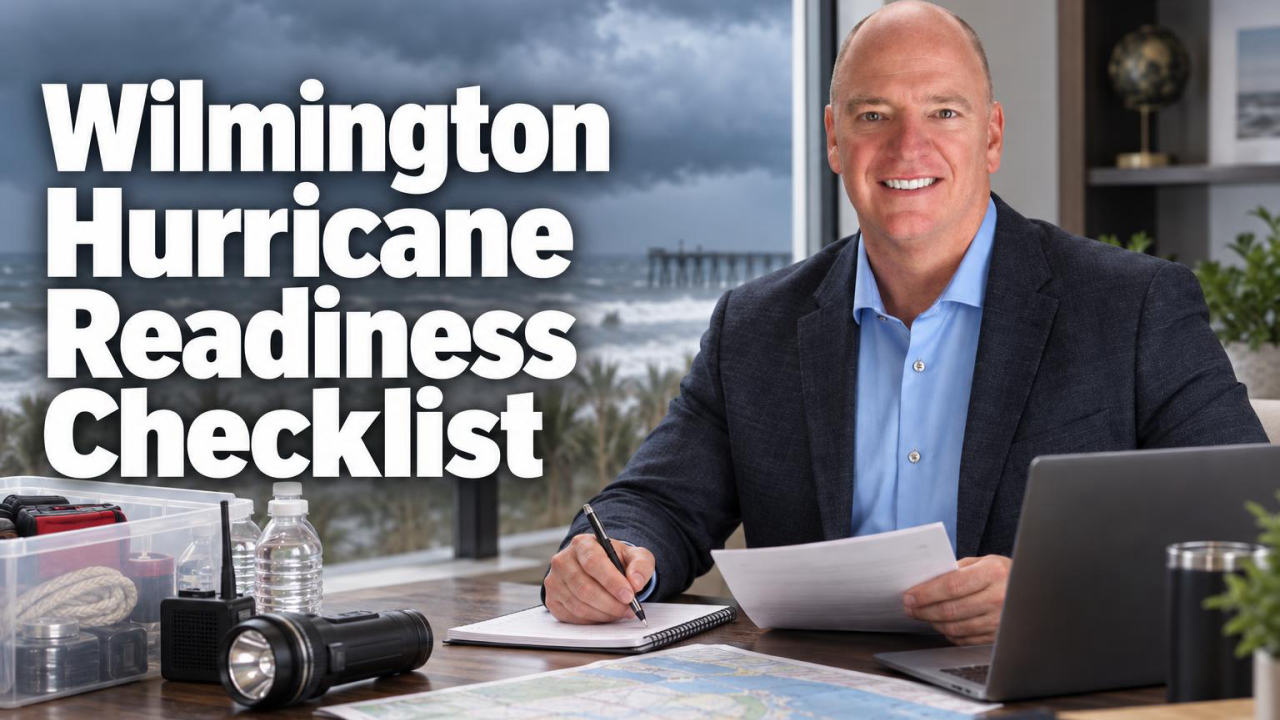
A new Atlantic hurricane forecast has been issued as peak season approaches. For Wilmington-area homeowners, buyers, and absentee owners, the right response is not alarm—it is a calm review of the property, insurance, documents, supplies, and people responsible for carrying out the plan.
Seasonal forecasts estimate activity across the entire Atlantic basin; they do not predict whether a hurricane will strike Wilmington. The practical move is to use the latest NOAA Atlantic hurricane outlook as a reminder to prepare before a specific storm appears on the map.
- Review wind, flood, and named-storm coverage before a storm is nearby.
- Inspect the roof, gutters, drainage, shutters, trees, and outdoor items.
- Create digital and printed records of the property and insurance contacts.
- Assign responsibilities, especially if the property is vacant or seasonally occupied.
- Follow official evacuation instructions rather than relying on forecast graphics alone.
What Does the New Atlantic Forecast Mean for Wilmington?
The forecast describes basin-wide potential, not Wilmington’s individual landfall risk. A busy season can produce no local landfall, while a quieter season can still deliver one damaging storm to the Cape Fear region.
The Atlantic season officially runs from June 1 through November 30, with activity historically peaking around early to mid-September, according to the National Hurricane Center’s tropical cyclone climatology. That timing makes the approaching peak a useful deadline for completing work that becomes difficult once contractors, supplies, and insurance representatives get busy.
Risk also varies by property. Homes near tidal water, low-lying roads, mature trees, or exposed coastal settings require different preparation than homes farther inland, so review the property itself rather than assuming every location shown in our guide to Wilmington Neighborhoods faces the same hazards.
What Should Homeowners Do Before a Storm Is Named?
Complete inspections, insurance reviews, documentation, and repair work before a storm threatens the coast. Once a system approaches, policy changes may be restricted, contractors become harder to schedule, and commonly needed supplies disappear quickly.

Property inspection checklist
- Roof: Look for loose shingles, lifted flashing, damaged vents, and deteriorated seals around roof penetrations.
- Drainage: Clear gutters, downspouts, driveway drains, swales, and stormwater paths without redirecting water toward neighboring property.
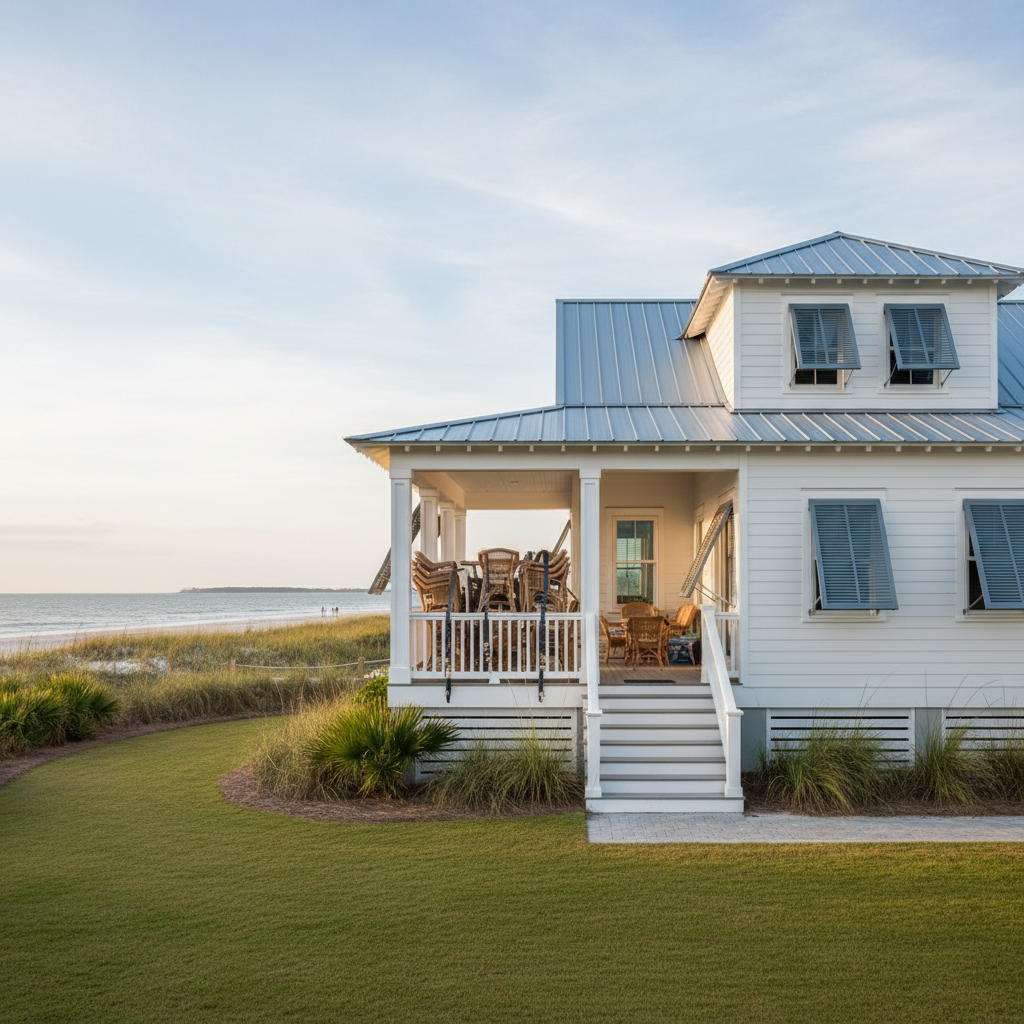
- Openings: Locate shutters or approved protective panels, confirm every window has the correct labeled panel, and verify that installation hardware is present.
- Outdoor items: Make a plan for furniture, grills, planters, trash containers, decorations, and recreational equipment.
- Trees: Ask a qualified professional to evaluate damaged, dead, or overhanging limbs; do not attempt hazardous trimming as a storm approaches.
- Mechanical systems: Identify electrical panels, water shutoffs, HVAC disconnects, generator connections, and sump or drainage pumps.
Our more detailed coastal property-readiness checklist for Wilmington covers inspection, flood-zone, insurance, and maintenance questions that remain useful throughout the year.
Which Insurance and Documents Should You Review?
Confirm what covers wind, wind-driven rain, flooding, temporary living costs, debris removal, and detached structures. Homeowners insurance and flood insurance are separate products in many situations, and coastal policies may contain named-storm or hurricane deductibles expressed as a percentage of insured value.
Ask the insurance professional to explain the deductible in dollars, not just as a percentage. Review the declarations pages, exclusions, claim-reporting instructions, mortgage information, and whether improvements or contents have changed since the policy was written; our coastal flood and wind insurance guide provides additional Wilmington-area context.
- Photograph every room, exterior elevation, major appliance, mechanical system, and valuable improvement.
- Record serial numbers and save receipts or invoices when available.
- Store copies in secure cloud storage and keep an offline copy with evacuation documents.
- Use the official FEMA Flood Map Service Center as a starting point, but do not treat a mapped zone as a guarantee that flooding will or will not occur.
How Does Preparation Change Across the Wilmington Area?
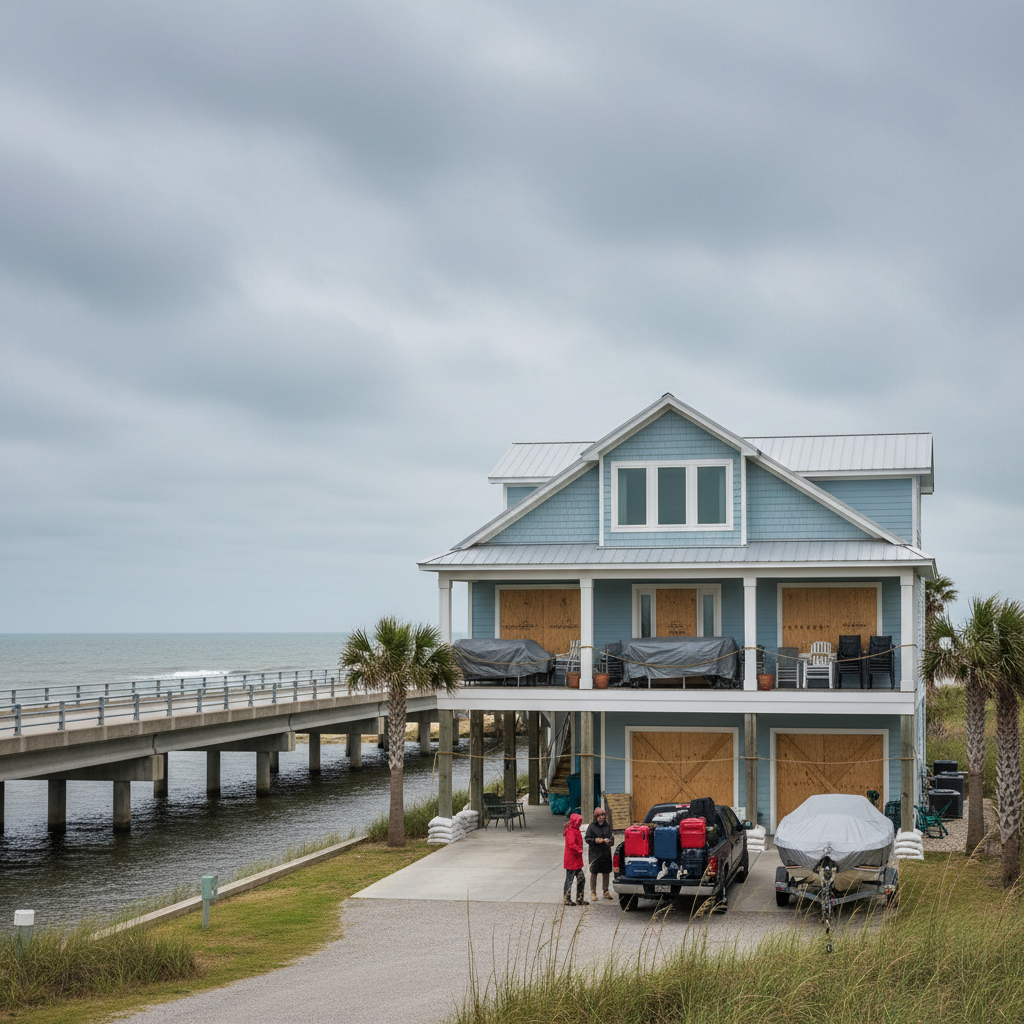
Barrier-island and beach properties require earlier access, evacuation, and storm-surge decisions, while inland homes still need wind, tree, drainage, and power-outage planning. Distance from the ocean alone does not determine risk because tidal creeks, rivers, low roads, and localized drainage can matter.
Owners reviewing properties on Figure Eight Island, among Carolina Beach homes, or within the Kure Beach real estate market should understand bridge access, evacuation routes, elevated utilities, flood coverage, and where vehicles will be moved.
Properties in Hampstead, Leland, and Wilmington’s inland neighborhoods may have different evacuation requirements, but they are not automatically free from flooding or wind damage. Compare the property’s elevation, drainage, roof condition, tree exposure, access roads, and insurance costs rather than relying on a broad inland-versus-coastal label.
What Should Wilmington Homebuyers Check Before Closing?
Buyers should investigate insurance availability, deductibles, flood information, drainage, roof condition, shutters, and past permits before their contractual deadlines. A mortgage estimate that excludes realistic wind and flood costs can understate the property’s true monthly ownership expense.
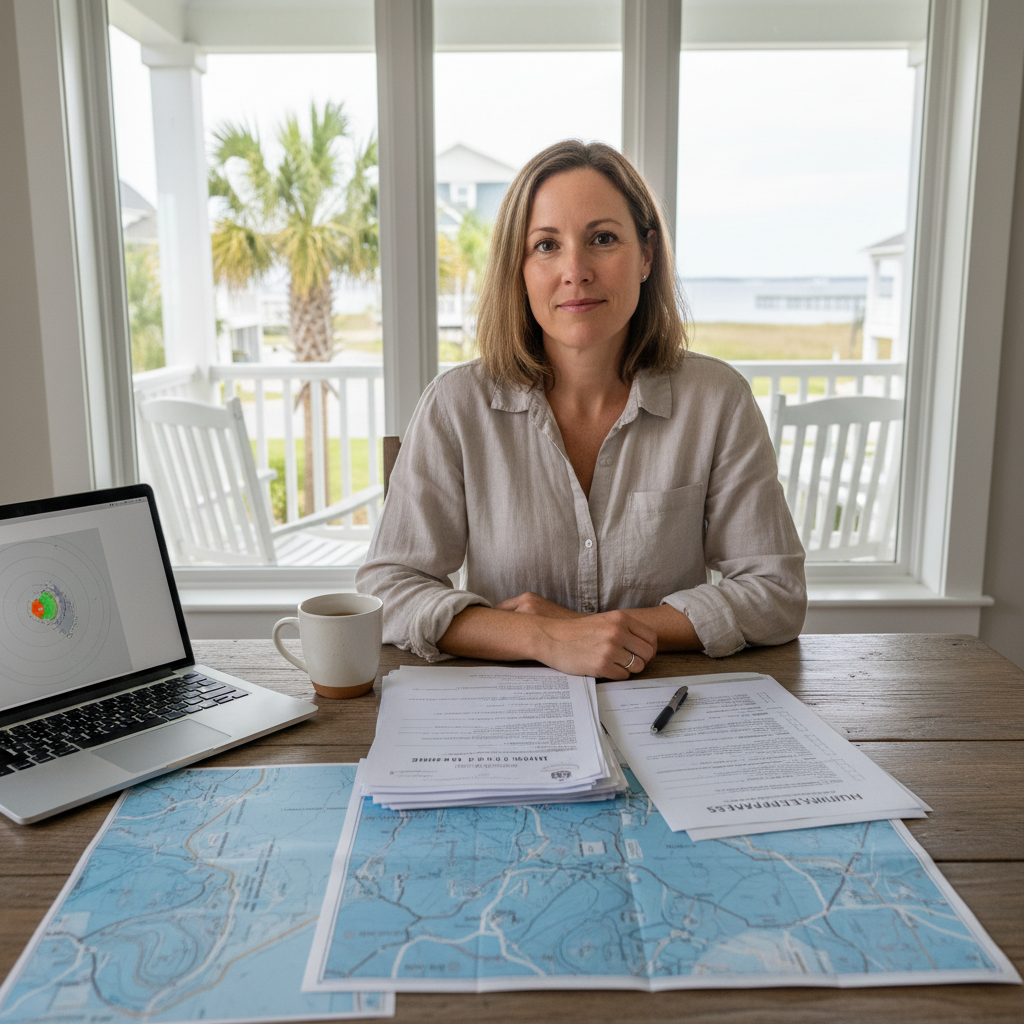
Start with the guidance for buying a home in Wilmington, then request property-specific insurance quotes early. Buyers can compare estimated principal and interest with the mortgage calculator, but taxes and realistic coastal insurance expenses must also be included in the final budget.
When evaluating Wilmington homes for sale, ask whether protective panels convey, where they are stored, and whether all windows and doors are covered. Buyers still learning the process can also use our Wilmington first-time homebuyer roadmap to coordinate inspections, financing, insurance, and closing tasks.
What Is the Best Hurricane Plan for an Absentee Owner?
An absentee owner needs a written local-response plan with a primary contact, backup contact, access instructions, spending authority, and a deadline for securing the property. A smart-home app is helpful, but it cannot install shutters, move furniture, document damage, or meet a contractor.
- Confirm who has keys, gate credentials, alarm information, and permission to enter.
- Write down the trigger for installing shutters and securing exterior items.
- Use water-leak, temperature, and power-loss alerts, but arrange an in-person backup.
- Photograph the property immediately before and after the storm when authorities say travel is safe.
- Never ask a caretaker to remain in an evacuation area or enter before local officials allow reentry.
Absentee owners unfamiliar with the wider area can review our Wilmington-area community guide and information about homes located near the region’s beaches. The goal is to understand the specific roads, bridges, waterways, and access constraints affecting the property.
When Should You Activate the Plan?
Begin monitoring when a storm could affect the region, but activate property and evacuation decisions according to official local instructions and your written deadlines. Do not wait for certainty; hurricane tracks, intensity, rainfall, and storm-surge impacts can change.
Before a threat exists
Complete repairs, review insurance, assemble supplies, label shutters, scan documents, test alerts, and assign responsibilities. Follow the Ready.gov hurricane preparedness guidance for household supplies and communication planning.
When Wilmington enters the forecast window
Secure outdoor objects, charge devices, refill prescriptions, photograph the property, review fuel and transportation plans, and communicate with household members or the local caretaker. Check North Carolina’s official Know Your Zone evacuation information rather than relying on social media summaries.
After the storm
Wait for official reentry guidance, avoid standing water and downed lines, photograph damage before temporary repairs, prevent additional damage when it is safe, and keep every receipt. Report claims through the procedure specified by the insurer and be cautious with unsolicited repair offers.
Wilmington Hurricane Readiness FAQs
Does an active Atlantic forecast mean Wilmington will be hit?
No. Seasonal forecasts estimate overall Atlantic activity and cannot determine whether a hurricane will make landfall in Wilmington.
When is peak Atlantic hurricane season?
Atlantic activity historically peaks around early to mid-September, although storms can occur throughout the official June 1 through November 30 season.
Does homeowners insurance cover hurricane flooding?
Standard homeowners coverage commonly does not cover rising-water flooding. Owners should review separate flood coverage, wind provisions, exclusions, and named-storm deductibles with an insurance professional.
Should inland Wilmington homeowners prepare for hurricanes?
Yes. Inland properties may still face damaging wind, fallen trees, localized flooding, blocked roads, and extended power outages.
What should an absentee owner arrange before peak season?
Arrange a primary and backup local contact, written access instructions, a shutter deadline, authority for emergency work, remote alerts, and safe post-storm inspection procedures.
What should a buyer investigate before purchasing a coastal home?
Investigate insurance availability and cost, deductibles, flood information, roof condition, drainage, elevation documentation, protective openings, evacuation access, and previous permitted repairs.
A forecast should prompt preparation, not panic. If you are reviewing your equity before making repairs or deciding whether to sell, you can get a free home-value estimate with no registration required; if you are comparing better-prepared properties, you can also search all available homes. For property-specific Wilmington guidance, contact the Buddy Blake Team before peak-season decisions become urgent.