What Zillow and Realtor.com Aren't Telling You — And How It Could Cost Heroes Their Benefits
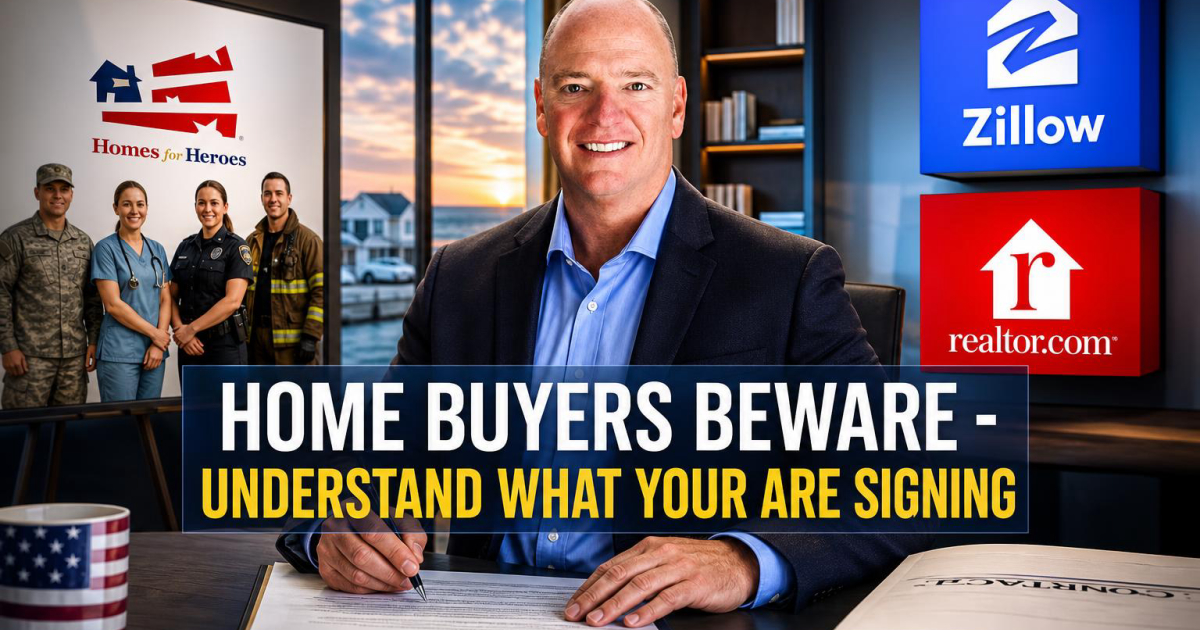
There is something happening right now in the real estate world that I feel a genuine obligation to talk about — not because it makes for a great headline, but because it is directly affecting real people in our community. Military families near Camp Lejeune, nurses, teachers, firefighters, law enforcement officers, and other heroes are clicking buttons on Zillow and Realtor.com, filling out showing request forms, and unknowingly signing legally binding buyer agency agreements that are quietly stripping them of thousands of dollars in benefits they fully qualify for. And the worst part? Most of them have no idea it's happening until it's too late.
I'm Buddy Blake, and my team at Wilmington NC Real Estate | Buddy Blake Real Estate Team has been part of the Homes for Heroes program for years. We receive one, two, sometimes three inquiries a week from heroes relocating to the Wilmington area — and increasingly, those conversations are ending in frustration because those buyers already signed something on a portal they didn't fully understand. This post is my attempt to slow everything down, explain what's actually happening, and make sure you know exactly what you're agreeing to before you click.
- Filling out a showing request on Zillow or Realtor.com can trigger a legally binding buyer agency agreement — not just a simple scheduling form.
- Portals like Zillow quietly collect 30–45% of the buyer's agent commission — money that could have gone back to you as a Homes for Heroes rebate.
- Military veterans, teachers, nurses, first responders, and other heroes who sign with a Zillow or Realtor.com agent lose eligibility for the Homes for Heroes benefit through our team.
- The NAR settlement changed the rules — buyers are now legally responsible for paying their buyer's agent if the seller doesn't cover it.
- Our team records a full video walkthrough of every document before you sign anything — so you always know exactly what you're agreeing to.
- If you qualify for Homes for Heroes, visit our Homes for Heroes affiliate page before you sign anything with anyone.
What You Think You're Signing vs. What You're Actually Signing
Here's the scenario playing out thousands of times a day across the country. A buyer — let's say a nurse relocating to Wilmington from Ohio — hops on Zillow, finds a home she loves in the Porters Neck area, and clicks the button that says "Schedule a Showing" or "Request a Tour." She fills in her name, email, and phone number. She thinks she's scheduling an appointment to see a house. That's it. That's all she thinks she's doing.
What actually happens next is where things get complicated. The inquiry gets routed to a Zillow Premier Agent — an agent who has paid Zillow for leads in that zip code. That agent contacts the buyer to confirm the appointment. And embedded in that confirmation process — often buried in the digital paperwork — is a document the buyer needs to sign before the agent can legally show the property.
In the best-case scenario, that document is a simple touring agreement — a limited, one-property agreement that carries no long-term obligation. But in a growing number of cases, what buyers are being asked to sign is a full buyer agency agreement — a legally binding contract that designates that agent as their exclusive representative and spells out a commission that the buyer agrees to pay.
The electronic signature process makes it incredibly easy to click right through without reading. Click, click, click, and it's done. Most buyers assume it's just part of scheduling the showing. They don't realize they've just entered into a legal representation agreement — one that could cost them money or disqualify them from benefits they've earned.
This isn't a hypothetical risk. Our team hears about this situation regularly. People call us excited about the Homes for Heroes program, and the very first question we have to ask is: "Have you already signed anything with another agent?" Far too often, the answer is yes — and they didn't even know it.
The NAR Settlement Changed Everything for Buyers
To understand why this matters so much right now, you need to understand what changed in the real estate industry over the last year or two. The National Association of Realtors (NAR) reached a landmark settlement agreement that fundamentally altered how buyer's agent compensation works in the United States. The settlement, which took effect in August 2024, introduced new rules that have significant consequences for every home buyer in America.
Under the new rules, buyer's agents are now required to have a written buyer representation agreement in place before showing a home. This agreement must specify the compensation the buyer's agent will receive. That's the rule that's driving the wave of agreements being sent to buyers before showings — agents are legally required to have it in place.
The critical shift is this: buyers are now legally responsible for paying their buyer's agent if the seller doesn't agree to cover that cost. In the old system, sellers routinely offered compensation to buyer's agents through the MLS. That offer of compensation has been removed from MLS listings. Now, whether the seller pays the buyer's agent is negotiated deal by deal — and if it doesn't get negotiated in, the buyer is on the hook.
Most buyer's agents — including our team — absolutely work to negotiate seller-paid compensation into every contract. But that's not guaranteed. And if you've signed an agreement with a Zillow agent or Realtor.com agent that specifies a commission of, say, 2.5%, and the seller only agrees to pay 2%, you owe that 0.5% difference out of your own pocket at closing. On a $400,000 home, that's $2,000 you didn't know you were going to pay.
For a deeper look at how the market is evolving and what these changes mean for buyers and sellers in our area, check out our Wilmington NC Real Estate Market Update — it covers exactly what's happening on the ground right now.
Where Your Commission Money Is Really Going on These Portals
Let me be crystal clear about something that almost no one talks about openly: when you work with a Zillow Premier Agent or a Realtor.com agent, a significant portion of the commission that agent earns — whether paid by the seller or by you — flows back to the portal. This is not a rumor. It is how these businesses operate.
Zillow, Realtor.com, UpNest, HomeGain, and similar platforms operate what are called referral fee programs. An agent pays to receive leads from the portal, and when a transaction closes, they pay a referral fee back to the portal — typically ranging from 25% to 45% of the total buyer's agent commission. On a $400,000 home with a 2.5% buyer's agent commission, that's a $10,000 commission — and Zillow could be quietly collecting $3,000 to $4,500 of that.
Here's the part that should make you stop and think: that money doesn't come from nowhere. It comes directly from the commission pool — money that, in a different arrangement, could have stayed with the agent and been used to serve you better, or in the case of Homes for Heroes, could have been rebated back to you as a cash benefit after closing.
There is nothing technically illegal about this arrangement — at least not yet. These are disclosed in terms of service that almost no one reads. But there is a growing national conversation about whether buyers are being adequately informed about where their money is going, and several lawsuits are challenging the transparency of these practices. The consumer deserves to know.
Our team does not operate through these referral-fee portals. When you work with the Buddy Blake Team, 100% of our commission stays with our team — and in the case of Homes for Heroes clients, a meaningful portion of that comes back to you. That's a fundamentally different financial model, and it matters.
What Is Homes for Heroes — And Who Qualifies?
Homes for Heroes is a national program designed to give back to the people who serve our communities. It is not a government program, and it is not a discount gimmick. It is a legitimate, structured rebate system where affiliated real estate professionals voluntarily contribute a portion of their commission to provide meaningful financial benefits to qualifying buyers and sellers.
The program covers a wide range of professions. If you fall into any of the following categories, you likely qualify:
- Military (active duty and veterans) — including all branches
- Law enforcement — officers, deputies, detectives
- Firefighters and emergency responders
- Healthcare workers — doctors, nurses, EMTs, paramedics
- Teachers and educators — K-12 and beyond
- Clergy and faith-based community leaders
The way it works is straightforward: our team participates in the Homes for Heroes affiliate program. When a qualifying hero buys or sells a home through us, we contribute a portion of our commission to the program. The hero then receives a rebate check — typically within three to four weeks after closing. This is real money back in your pocket, not a coupon or a discount on services.
Over the years, our team has given back hundreds of thousands of dollars to heroes in our community through this program. We do it because we believe it's the right thing to do. These are the people who protect our neighborhoods, heal our sick, educate our children, and defend our country. Giving back a portion of our commission is the least we can do.
Given our proximity to Camp Lejeune, this program is particularly meaningful in our market. We regularly work with Marines and their families who are PCSing (Permanent Change of Station) to the Wilmington area, exploring Wilmington NC neighborhoods and communities, and looking for the right home close to base. The Homes for Heroes benefit can mean real, significant savings for these families — if they don't accidentally sign it away before they even meet us.
How Zillow and Realtor.com Are Quietly Killing Your Hero Benefits
Here is the core problem, stated as plainly as I can: the Homes for Heroes rebate can only be delivered through an affiliated agent who is representing you in the transaction. If you have already signed a buyer agency agreement with a different agent — even one you met through Zillow for a single showing — you are no longer a free agent. You have an agent. And that agent is not us.
This means the rebate check that should have come back to you — potentially $500, $1,000, $1,500 or more depending on the purchase price — doesn't come to you at all. Instead, the commission flows through the portal's referral structure, with a large cut going to Zillow or Realtor.com. The hero gets nothing. The portal gets paid. And nobody told the buyer this was happening.
Think about that for a moment. A veteran who served this country, who qualifies for a meaningful cash benefit specifically designed to honor their service, clicks a button on Zillow to schedule a house tour — and in doing so, unknowingly hands that benefit over to a billion-dollar tech company. That is not okay. That is why I'm writing this post.
The same dynamic applies to nurses who've been working through a pandemic, teachers who've spent their own money on classroom supplies for years, and firefighters who run toward danger every day. These are exactly the people Homes for Heroes was created for. And portals with billions of dollars in advertising budgets are, whether intentionally or not, intercepting those benefits before they ever reach the people who earned them.
Real Conversations We're Having Every Week Near Camp Lejeune
Because we are located in Wilmington, NC — and because Camp Lejeune is one of the largest Marine Corps bases in the world, just over an hour away — we have a significant population of military buyers and veterans in our market. Jacksonville, Sneads Ferry, Surf City, and communities throughout Pender and Onslow Counties see a constant flow of military families looking to put down roots.
Through our Homes for Heroes affiliation, we receive multiple inquiries every single week. A Marine hears about the program from a buddy who got a check after closing. A Navy corpsman's wife reads about it online. A retiring Master Sergeant is looking to buy his forever home near the beach and wants to maximize every dollar.
The conversation almost always starts the same way: they're excited, they've done their research, they know they qualify. And then we have to ask the question: "Have you already been in contact with any other agents or signed anything online?" Too often, the answer is something like: "Well, I was on Zillow last week and I requested a showing on a house in Hampstead, and the agent sent me some paperwork to sign before we could go see it..."
And that's where our hearts sink a little. Because depending on what they signed, they may have just locked themselves into a buyer agency agreement with a Zillow agent — which means we cannot represent them through Homes for Heroes, and the rebate benefit they were counting on is gone. Not because they did anything wrong. Because they didn't know what they were signing.
Some of these buyers want out of those agreements. And here's where things get even more complicated: it depends entirely on the agent and the company. On my team, I have a clear policy — if a buyer doesn't want to work with us, I will let them out of any agreement, no questions asked, no charges. I'm not going to hold someone hostage. But that is absolutely not the universal standard. Many agents and companies will hold buyers to those agreements, and legally, they have every right to do so.
The National Lawsuits You Should Know About
The NAR settlement that reshaped buyer representation rules was itself the result of major litigation — specifically the Sitzer/Burnett case, in which a Missouri jury found NAR and several large brokerages liable for conspiring to inflate buyer's agent commissions. The $418 million settlement that followed changed the entire industry, and its ripple effects are still being felt today.
But that's not the only legal action in motion. There are ongoing and emerging lawsuits specifically targeting the practices of real estate portals and their referral fee arrangements. The core legal question being raised in some of these cases is: are consumers being adequately disclosed about where their commission dollars are going? When a buyer signs an agreement with a Zillow agent and a significant portion of that commission flows back to Zillow as a referral fee, is that a material fact the buyer should have been told about?
Consumer advocacy groups and some state attorneys general are paying close attention to these practices. The argument is straightforward: if you're paying for a service, you deserve to know who else is getting paid from that transaction and how much. The portal referral fee model, as currently practiced, operates largely in the shadows — disclosed in fine print that almost no one reads.
I am not a lawyer, and I am not giving legal advice. But I am telling you as someone who has been in this industry since 1998 and has watched these dynamics play out: do your research. Ask questions. Read what you sign. And if you want to understand more about how the legal landscape is shifting for buyers and sellers, our post on why seller representation at closing matters more than you think gives important context on the legal dimensions of real estate transactions.
How the Buddy Blake Team Operates Differently
I want to be very clear: I am not here to trash Zillow or Realtor.com as companies. They have spent billions of dollars building platforms that make it easy for consumers to find homes, and there is real value in that. What I am saying is that their business model creates situations where consumers — especially heroes who qualify for meaningful benefits — can unknowingly lose those benefits before they even know what happened.
Our team operates on a fundamentally different philosophy. We believe that you cannot truly represent someone if they don't understand what they're agreeing to. That's why we have developed a specific practice: before we ever ask a buyer to sign anything, we record a full video screen-share walkthrough of every document we're going to send them. We explain what each section means, what they're agreeing to, and what their rights are. Then we send the video. Then we send the documents for electronic signature.
This takes more time. It requires more effort. But it means that when our clients sign something, they actually know what they signed. That's not a revolutionary idea — it's just basic respect for the people we serve. And it is, frankly, how every agent in this industry should be operating.
Our team policy on buyer agency agreements is also different from many in the industry. If a buyer decides they don't want to work with us — for any reason, at any point — we will release them from any agreement without charging them anything. Period. No hard feelings, no legal threats, no invoices. We believe that the best clients are the ones who genuinely want to work with us, and we'd rather earn that trust than enforce it through a contract.
This approach is not the industry norm. Many agents and companies will absolutely hold buyers to signed agreements and pursue compensation if those buyers try to work with someone else. That is their legal right. But it is not how we operate. And we think consumers deserve to know the difference before they sign anything with anyone. Read about what a truly client-first experience looks like in Tanya B.'s 5-Star Experience selling her Wilmington home — that's the standard we hold ourselves to.
We also stay current on the issues affecting our industry and our clients. Our post on how real estate companies and teams need to work together for better agent onboarding speaks to our commitment to raising the bar across the entire profession — not just for our own team.
What You Should Do Before Signing Anything
Whether you're a hero who qualifies for Homes for Heroes or simply a buyer who wants to protect yourself, here is a clear action plan before you sign any document related to buying a home:
- Do not fill out showing request forms on Zillow or Realtor.com if you are actively working with — or planning to work with — a specific agent. Route your inquiries through your chosen agent instead.
- If you receive documents to sign before a showing, read them fully. Ask the agent: "Is this a touring agreement or a full buyer agency agreement?" Know the difference before you click.
- If you qualify for Homes for Heroes, register through our affiliate link FIRST — before you engage with any portal or sign anything with any agent. Visit homesforheroes.com/affiliate/buddy-blake to get started.
- Ask any agent you're considering: "Do you pay a referral fee to Zillow or any other portal for my lead?" Their answer will tell you a lot about the financial structure of your relationship.
- Use our home affordability calculator to understand your budget before you start shopping — so you're making informed decisions from the very beginning.
- If you've already signed something and you're not sure what it means, call us. We'll look at it with you and give you an honest assessment. No obligation, no pressure.
The bottom line is this: the real estate buying process has gotten more complicated over the last two years, not less. The new rules were supposed to create more transparency, but the way they're being implemented through billion-dollar advertising platforms is creating more confusion for the very consumers those rules were designed to protect. Slow down. Ask questions. Know what you're signing.
Buying a Home in Wilmington NC — Start Here
If you're planning to buy a home in the Wilmington area — whether you're relocating from across the country, PCSing from a military base, or simply making a move within the region — the Wilmington market has a lot to offer. From the oceanfront communities of Wrightsville Beach and Carolina Beach to the family-friendly neighborhoods of Porters Neck, Ogden, and Mayfaire, to the growing communities of Leland and Hampstead across the bridge, there is genuinely something for every buyer here.
Explore the full range of Wilmington Neighborhoods to get a feel for the different areas, price points, and lifestyles available across our market. Whether you're drawn to the energy of downtown Wilmington, the laid-back vibe of Monkey Junction, or the newer construction communities of Castle Hayne, understanding the neighborhoods is the first step to finding the right home.
Our full Wilmington NC Neighborhoods and Communities guide breaks down each area with detail that no portal algorithm can replicate — because it's written by someone who has lived here his entire life and has sold homes in virtually every neighborhood in the region.
When you're ready to search, use our MLS property search form to browse active listings across New Hanover, Pender, and Brunswick Counties. You can also explore our complete Wilmington Area MLS listings site map to find properties by address or MLS number. And if you're interested in new construction, our dedicated new construction homes in the Wilmington NC area page has everything you need to know about building or buying new.
For buyers who are also thinking about the financial side of things, our home sale net proceeds calculator can help you model out what selling your current home might net you — useful context as you plan your next move. And our complete buyer's guide for Wilmington NC walks you through every step of the purchasing process with local expertise built in.
The Wilmington market continues to attract buyers from across the country, and with major developments like the UNCW Medical School coming to the area, the long-term growth trajectory here remains strong. Healthcare workers relocating for those opportunities — many of whom qualify for Homes for Heroes — should absolutely be aware of these issues before they start their home search online.
Browse our real estate tips blog for ongoing guidance on navigating the buying and selling process, and check our Wilmington NC Real Estate Blog regularly for market updates, neighborhood spotlights, and insider perspectives. You can also search all available Wilmington area homes directly on our site — no lead forms, no portal agreements, no surprises.
Follow us on YouTube and Facebook for regular video content, market updates, and community spotlights. We talk about these issues openly and often — because an informed buyer is a protected buyer.
If you have any questions at all about what you've signed, what you qualify for, or how to get started the right way, please reach out to us directly. We are happy to answer your questions honestly, point you in the right direction, and make sure you understand every step of the process before you commit to anything. That's not a sales pitch. That's just how we think everyone deserves to be treated.
Are You a Hero? Protect Your Benefits Before You Sign Anything.
Military, veterans, healthcare workers, teachers, law enforcement, firefighters, and clergy — you may qualify for a real cash rebate after closing through the Homes for Heroes program. But you can only get it if you haven't already signed an agreement with a Zillow or Realtor.com agent. Register through our affiliate link first, then let us guide you through the entire process — transparently, honestly, and with your best interests at heart.
Claim Your Homes for Heroes Benefit → Search All Wilmington Homes →Assisted by