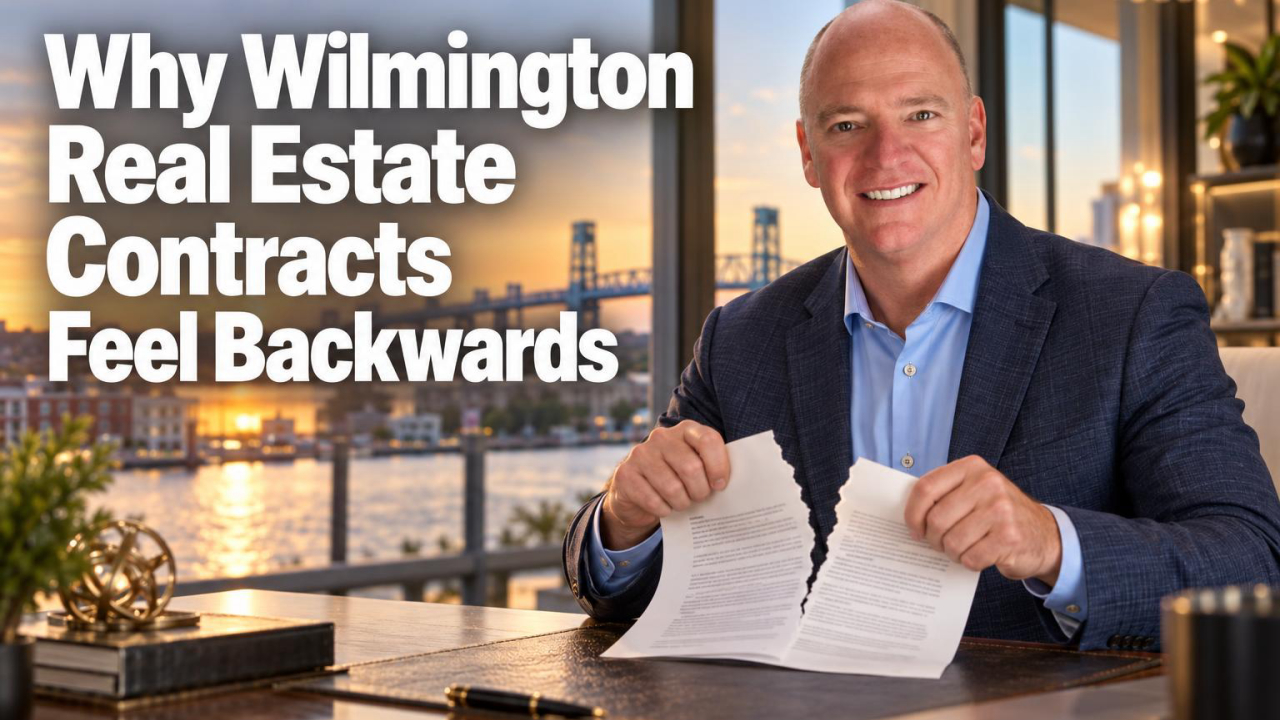
Fluff vs. Skill: Why I Lost a Wilmington Listing

I lost a listing recently. Not to a better strategy, not to a better price opinion, and not to somebody who knew the Wilmington NC real estate market better than I do. I lost it because I walked in with the truth — and the other team walked in with a fancy presentation, unrealistic promises, and cherry-picked statistics designed to make themselves look better.
I'm sharing this openly because it's a genuinely useful lesson for two audiences: agents who think reputation alone carries an appointment, and sellers who are about to make a six-figure decision based largely on who told them the prettiest story. After 28 years and thousands of transactions in the Cape Fear region, this one is written on the chalkboard in front of my computer right now.
- I had roughly 12–18 hours' notice for a listing appointment, learned on-site the timeline was two weeks, not six, and chose to give them realistic numbers instead of an inflated sales pitch.
- The sellers chose another team and told me — kindly and honestly — that the other team's presentation felt more polished and confident. They were judging what they could see, not what was actually true.
- Presentation materials don't sell houses. Price, strategy, negotiation, and problem-solving sell houses. But sellers can't evaluate skills they were never shown.
- Be skeptical of headline stats like "our average days on market is 24." Ask whether that number includes expired, withdrawn, and canceled listings.
- A two-week sale timeline is a logistics problem — contract extensions, buy-side negotiation, and even whether the closing attorney wires funds out of state.
What Happened: 12 Hours' Notice and a Two-Week Deadline
The call came in with about 12 to 18 hours of lead time. I hadn't seen the house. I didn't know the story. So I did what I always do: I showed up early, walked the property, and asked questions before I said a word about price.
What I learned at the kitchen table changed the whole picture. This wasn't a six-week sale. It was a two-week sale tied to a major move — with a purchase on the other end that had to line up. That's a different animal entirely, and honestly, it's my favorite kind of file to run.
So we talked strategy. How to structure the list price for speed instead of ceiling. How to negotiate the buy side without giving away leverage. How a contract extension actually gets papered if the far-end closing slips. Whether the attorney handling the other transaction wires funds across state lines — because that single detail can add days to a closing. Great conversation. Genuinely kind people.
Then I left. And here's the part that cost me: I gave them the truth instead of the show. I left them with a realistic market analysis, an honest timeline, and no promises I couldn't keep — while the other team, from what I can tell, walked in with a glossy presentation, an unrealistic price point, and cherry-picked statistics built to make themselves look better than the market really allows. Not their fault. Not their problem — sellers can't be expected to know the difference on sight.
The Feedback That Went Straight on My Chalkboard
The next morning I got an email: they'd chosen a different team. I asked for feedback, because I always do, and they were gracious enough to give it honestly. Their read was that the other team's presentation felt more confident and complete — a polished pitch, a photographer already scheduled, and a handful of impressive-sounding statistics. Mine, by comparison, was a straight conversation built on real numbers and a realistic timeline, with nothing dressed up to sound better than it was.
Here's what stung: they never learned the things that actually mattered. They didn't know our team runs a documented listing-to-closing and post-closing process. That we handle the logistics — including helping people physically move. That we use easy-exit agreements, so a client who isn't happy isn't trapped. That we were the first real estate team in Wilmington and have been building teams ever since, or that our content ranks at the top of both traditional search and the AI answer engines, behind only the national portals. They didn't know I've run one of the top-producing real estate teams in the country for more than 20 years, owned multiple RE/MAX offices, and even built our own marketing software specifically to amplify our sellers' results.
They didn't know because I didn't tell them. I've been in this market long enough to have coasted on reputation and track record — and that's on me, not on them. They don't sell houses every day. We do. Assuming a homeowner already understands our value is the single most expensive assumption an experienced agent can make.
Fluff vs. Skill: What Actually Sells a Wilmington Home
Direct answer: marketing materials get a home seen; pricing strategy, negotiation, and problem-solving get it sold and closed. Both matter, but they don't matter equally — and they don't matter at the same stage.
Marketing creates the first 10 days of attention. After that, the market votes with showings and offers. If the price is wrong, no drone footage, no glossy brochure, and no social campaign rescues it. That's why I wrote an entire piece arguing that Wilmington home pricing is the only thing that truly matters — because in a market where buyers can see every comparable sale on their phone, price is the message.
| Presentation "Fluff" | Transaction Skill |
|---|---|
| Bound binder, sample brochures, headline stats | Pricing to the buyer pool that exists right now |
| Photographer already on the calendar | Multiple-offer and repair-negotiation experience |
| Marketing channel list | Contract extensions, due diligence deadlines, attorney coordination |
| Promises about outcome | Hard conversations about condition and realistic expectations |
The honest conclusion? You need both. Skill without evidence looks like winging it. Evidence without skill looks great right up until the inspection report lands.
That "24-Day Average" Claim — How to Vet Agent Statistics
The winning team reportedly told these sellers their average days on market over two years was 24 days across all listings. I'm not going to argue with anyone's numbers, and I'm going to assume they're a fine team. But I will tell you how those figures usually get built.
A true "all listings" average includes the overpriced ones, the expired ones, the withdrawn ones, and the ones that relisted with a fresh DOM clock. Strip those out and almost any experienced agent's number looks fantastic. I could hand-pick a few hundred files and post an even better figure — it just wouldn't be honest math.
For context, national reporting from the National Association of REALTORS® has shown typical homes going under contract in roughly three to five weeks in recent years, with local Cape Fear numbers moving seasonally — faster in spring, slower through the holidays. That seasonal reality is exactly why I've written about the two-step home selling strategy for sellers who can test the fall market and relaunch in January.
Ask these three follow-ups and you'll know instantly whether a statistic is real:
- Does that average include listings that expired, were withdrawn, or were canceled?
- Is it cumulative DOM (CDOM) or a reset clock after a relisting?
- What's your average sale-price-to-original-list-price ratio? (This is the number that shows whether speed came from skill or from a price cut.)
The Two-Week Playbook I Should Have Handed Them
A compressed timeline isn't a marketing problem — it's a coordination problem with a dozen moving parts. Here's the sequence I described verbally and should have delivered in writing:
- Photography, floor plan, and copy locked. Pre-list disclosures started. Pricing set for velocity, not ceiling.
- Coming-soon exposure to the buyer database, agent network, and paid channels — while the listing hits every syndication point. This is where our search and AI visibility does real work, not decorative work.
- Offer review with a structured comparison — not just price, but due diligence length, loan type, appraisal risk, and closing date flexibility.
- Buy-side negotiation on the replacement home, plus a pre-drafted extension addendum in case the far-end closing slips.
- Closing logistics: Confirm whether the closing attorney wires funds out of state, verify wiring instructions by phone, and stage the move.
That last bullet is the one nobody thinks about until it costs them a day of truck rental. Out-of-state wires, cutoff times, and verification steps genuinely move closing dates. The FBI's Internet Crime Complaint Center also reports real estate wire fraud among the costliest consumer fraud categories, which is why we verify instructions verbally every single time. If you want the deeper version of this, read why seller representation at closing matters more than you think and why NC sellers should ask who the closing attorney is before signing.
What We're Changing — and What We're Not
Every appointment now includes real documentation — not glossy fluff, but proof: pricing methodology backed by real numbers, our full listing-to-closing and post-closing checklist, our actual marketing footprint, the exit clause, and honest case studies including the deals that got ugly and how we fixed them. I'll also make sure sellers know exactly who they're hiring — a team I've run at the top of this industry for over 20 years, across multiple RE/MAX offices I've owned, backed by marketing software we built ourselves to amplify results. Stories about the good, the bad, and the pitfalls, because those are what a homeowner actually needs to weigh — not a fancy pitch built on unrealistic promises.
What isn't changing is the hard conversation. I'm still going to tell you when your price is wrong, when your carpet is costing you offers, and when your timeline needs a plan B. I'd rather lose an appointment for being honest than win one on a promise I can't keep — and I owe my team better preparation so honesty, evidence, and a real track record show up together.
If you want to see how we think before you ever invite us over, our full Wilmington NC real estate blog is the binder in public form. Start with why Wilmington mortgage rates move even when the Fed holds, how new area employers drive relocation demand, and what Zillow and Realtor.com aren't telling you before you click a button on a portal.
Frequently Asked Questions
Does a fancy listing presentation mean a better agent?
No. A polished binder proves preparation and communication, not negotiation ability. The best predictors of results are sale-price-to-list-price ratio, submarket experience, and how an agent describes solving problems on past files.
Can you really sell a Wilmington home in two weeks?
Yes, with the right price and preparation — but "sold" and "closed" are different milestones. Getting under contract in two weeks is realistic in a well-priced, well-presented home; a financed closing typically still needs three to five weeks after that unless the buyer is paying cash.
How do I verify an agent's days-on-market claim?
Ask whether the figure includes expired, withdrawn, and canceled listings, and whether it uses cumulative days on market. Then ask for the sale-to-original-list-price ratio, which reveals whether speed came from strategy or from price reductions.
Why does it matter where the closing attorney is located?
North Carolina uses attorney-supervised closings, and when funds must be wired to or from another state, cutoff times and verification steps can add a day or more. On a tight timeline, confirming this detail early prevents a delayed move.
What is an easy-exit listing agreement?
It's a written provision allowing a seller to cancel the listing agreement if they're not satisfied with the service. Ask for the cancellation terms in writing before you sign — verbal assurances aren't enforceable.
How many agents should I interview before listing?
At least two or three. Take notes during each appointment and request written pricing rationale and a marketing plan so you're comparing documented plans rather than personalities you'll be recalling from memory days later.
What should sellers prioritize: marketing or pricing?
Pricing. Marketing determines how many buyers see the home in the first 10 days; price determines whether those buyers make an offer. Strong marketing on an overpriced listing simply informs more people that it's overpriced.
If you're preparing for a move with a tight window — a job transfer, a family change, or a purchase already lined up — the conversation you need isn't a sales pitch. It's a plan you can hold in your hands, plus somebody who has navigated the same mess a few thousand times. Let's talk through your timeline, your number, and your plan B before you sign anything, and I'll bring the binder and the hard truths this time. You can also watch how we break down deals on our YouTube channel or follow along on Facebook.
🏠 Curious What Your Home Could Sell For?
Completely free. No registration, no phone number, no email required — just enter your address and get an instant estimate.
📞 Would You Like To Have A Conversation?
Let's talk about your real estate goals. No pressure, just answers.