
Less Is More: Why Too Many Listing Photos Can Hurt Your Sale
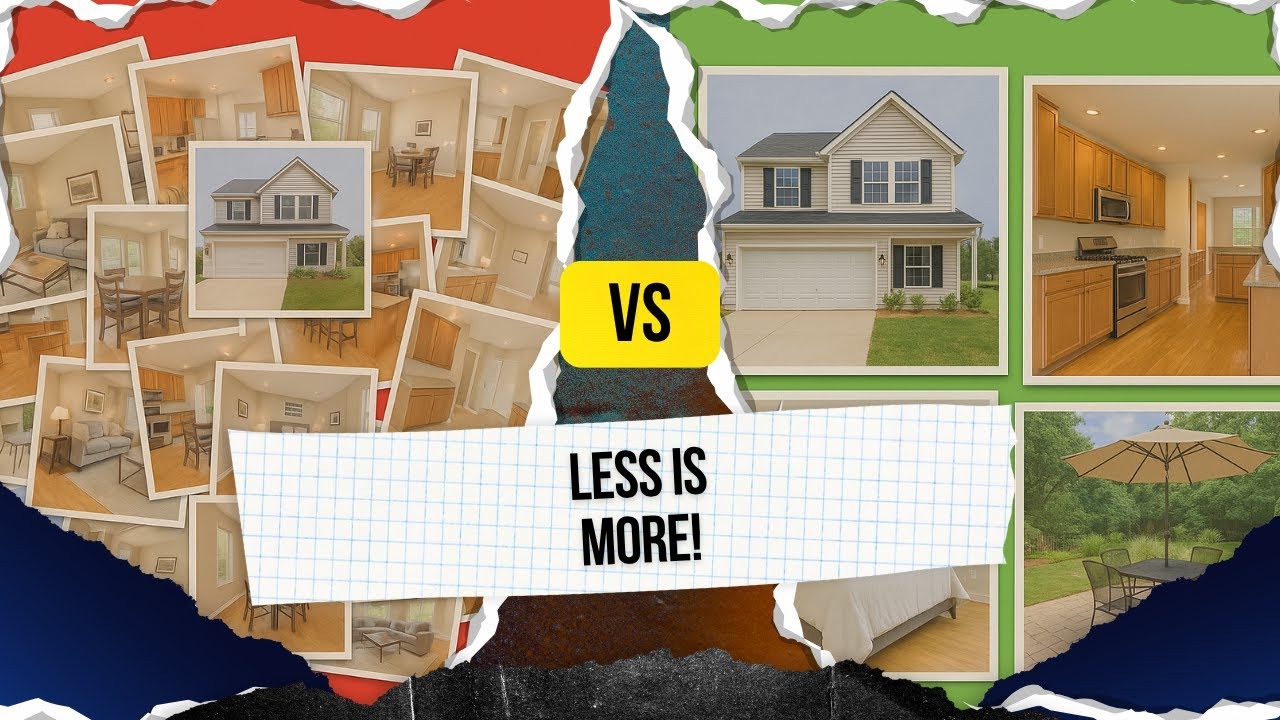
If you're selling a home today, it probably feels like the rules have changed. Online listings are packed with photos, videos, 3D tours, floor plans and room measurements, and sellers are often told that showing everything is the best way to attract buyers. It sounds reasonable: if buyers can see more, they should feel more confident.
In reality, showing too much often does the opposite. We've swung from barely any visual material to overwhelming buyers with it. COVID accelerated that shift, and some of those tools were necessary during the pandemic, but most of the industry never recalibrated.
The Listing With Nearly 90 Photos
Let me tell you a story. I spoke with a seller whose home didn't sell, and they asked me the obvious question: “Why didn't it sell?”
After a few questions about how many showings they'd had and what the feedback was, the picture came into focus. The listing had tons of online views but very few in-person showings.
Here's the kicker. It had nearly 90 photos, multiple videos, a 3D tour and complete diagrams with room measurements. And yet, no traction. Buyers eliminated the home before they ever set foot inside.
Why More Information Can Hurt Your Listing
We leaned on all those tools during COVID because buyers were often deciding sight unseen. Today, buyers use them to rule homes out, fast, based on images that may not represent how the home truly feels.
Every image becomes a chance to find something they don't like. A room can look smaller than it feels because of the camera angle. A hallway can look narrow even though it flows well in person. A 3D tour can call attention to a ceiling slant nobody would notice standing in the room, and online it becomes a mental red flag.
Once buyers think they've seen the whole house, many simply move on. They don't book a showing to confirm what they saw. They trust their screen and keep scrolling.
Too Much Detail Creates Elimination Points
This problem existed long before online listings. Years ago, sellers used printed flyers that listed every room dimension. Buyers would glance at a number, decide a room was too small and rule the home out without stepping inside. Those flyers became known as elimination tools because they filtered buyers out too early.
Room size is still the classic example. A dining room that measures 10x12 can sound limiting on paper. But when buyers walk through it and see how it connects to the rest of the home, that concern often disappears. They picture their own furniture and how they'd use the space, and that is far more powerful than anything on a screen.
Modern listings do the same thing the old flyers did, just on a much bigger scale. The more details buyers get online, the more chances they have to talk themselves out of a showing.
Buying a Home Is Emotional
Buying a home is an emotional, sensory experience. You can't capture the feeling of stepping into a spa-like walk-in shower in a photo. Flow, layout and the way you move through a space are best understood in person. Photos flatten that experience and often exaggerate flaws.
Despite all the technology, most buyers still won't buy without walking through the property. If you give everything away online, they have less reason to visit. And if they don't visit, they can't fall in love. That's how a well-priced home in good condition ends up with too few showings: not a lack of interest, but buyers who feel they've already seen enough to decide, based on incomplete or misleading information.
Lead with roughly ten to twelve of your strongest, highest-quality images: the main living areas, an impressive primary suite, a striking exterior. That's enough to spark curiosity and imagination. Anything you add beyond that should earn its place, not just pad the count.
The purpose of online marketing is not to replace the showing. It's to invite it.
Best Practices for Listing Media
- Use fewer, higher-quality photos that showcase the most appealing parts of the property, led by your best ten to twelve.
- Keep room dimensions out of your primary marketing materials. Save them for agent documents.
- Rethink 3D tours and detailed walkthrough videos unless the property truly warrants them.
- Never hide information, but be strategic about what buyers see first.
- Avoid vertical photos, especially of bathrooms. They often render poorly and rarely add value.
The Real Goal of Marketing a Home
We're not trying to hide flaws. We're trying to invite buyers to experience the home in person. Marketing should guide buyers to the next step, not convince them they already have all the answers. If there's no curiosity, there's no showing. Without showings, there are no offers.
Media is only one piece. Price and presentation carry just as much weight, and you can see how that plays out locally on our Wilmington seller numbers page and in the failed-to-sell and pricing data by town.
So remember: less is more. Lead with your best. Leave room for imagination. And give buyers a reason to walk through that front door.
If you're planning to sell and want a straight answer on what actually works in today's market, call or text me at (910) 395-1000, or see how I sell homes and what yours is worth.