Selling a Rental or Tenant-Occupied Home Along the NC Coast
🎙️ Listen: Buddy talks through this article · 9 min
An AI-produced audio version of this article, from Real Stories with Buddy Blake.
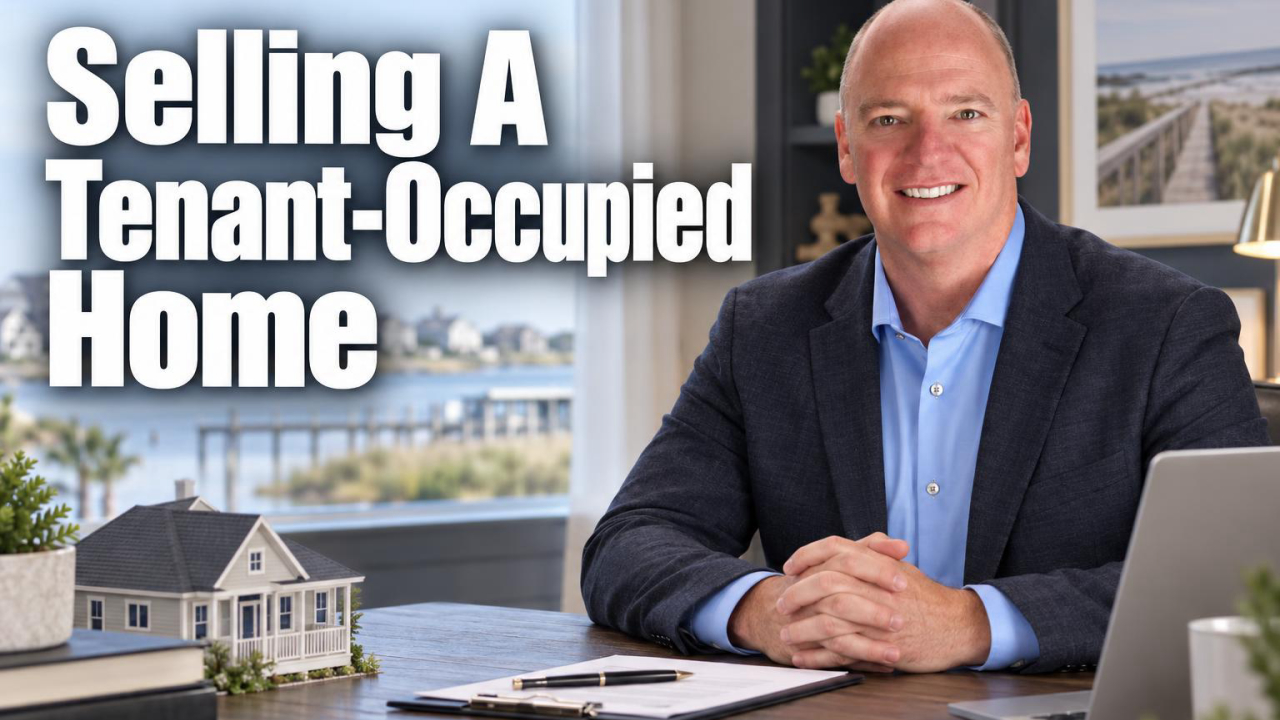
I get a version of this call every few months. Somebody owns a rental in Wilmington, or a place at the beach they've rented out on Airbnb or to a long-term tenant, and they've decided it's time to sell. The first question is almost never price. It's "what do I do about the tenant."
Selling an investment property isn't harder than selling a primary home, but it is different. There are more moving parts, and most of them need to be decided before you list, not after.
Sell With the Tenant in Place, or Sell It Vacant
This is the first fork in the road. You can sell with the tenant in place, which often means selling to another investor who wants the rental income to keep coming. Or you can wait until the lease ends, get the tenant out, and sell to an owner-occupant.
Each path has trade-offs. Selling occupied usually means a narrower buyer pool — mostly investors, not families looking for their own home — which can affect price and how long it takes to find the right buyer. Selling vacant usually opens the door to more buyers, but you're giving up rent during the gap, and you may have repairs or updates to make once the tenant's out that you couldn't do while they were living there.
There's no universal right answer. It depends on the property, the lease term left, the local demand, and how much lost rent you can absorb. I walk through both scenarios with real numbers before you decide anything.
Read the Lease Before You Do Anything Else
Before a rental goes on the market, I want to see the lease. What does it say about notice for showings? Does it say anything about what happens if the property sells? Does the lease carry over to a new owner, or end at closing?
These are legal questions, and I'm not a lawyer. This is exactly why I have my sellers talk with a real estate attorney before we list a tenant-occupied property — my team includes an hour with one as part of how we work together. Get the lease terms straight first. It saves headaches with the tenant, the buyer, and the closing table later.
Showing a Home Someone Else Lives In
A lived-in rental shows differently than a vacant one. The tenant's cooperation matters more than people expect. A tenant who tidies up before showings, gives reasonable access, and doesn't make buyers feel unwelcome can help a sale move along. A tenant who resents the process can slow everything down or scare off buyers before they even walk in the door.
I coordinate showings respectfully, with as much notice as the lease and the tenant need. Good communication with the tenant, early and often, tends to make or break how smoothly this part goes.
If It's Vacant: Staging, Photos, and a Pre-Market Inspection
If the tenant's already out, or the unit's between leases, that opens up options. A vacant space photographs oddly empty, so we use virtual staging to help buyers picture furniture and flow, along with professional photos and accurate measurements.
I also do a pre-market inspection on every listing, paid for by my team, before it goes live. This matters even more with rental properties. Years of tenant turnover mean wear that an owner living in the home wouldn't have. Better to know what a buyer's inspector will find before it becomes a surprise mid-contract.
Taxes Are Different for Investment Property
Selling a home you've lived in and selling a rental are not the same conversation when it comes to taxes. I'm not a tax professional and I won't pretend to give tax advice here — but I will tell every rental owner the same thing: talk to your CPA or tax advisor before you sell, not after. The numbers on an investment property can look very different from a primary residence, and you want that answered ahead of time, not as a surprise next April.
Beach Rentals Have Their Own Wrinkles
A lot of what I've covered here applies just as much to a beach property as it does to a house in midtown Wilmington. I've written before about Carolina Beach homes used as a primary residence, a weekend place, or a rental, and the same questions apply — how it's used now shapes how we sell it. If you're weighing that decision for a place near the water, that post is worth a look before you decide anything.
Your Options When You're Ready
Once we've worked through the lease, the tenant, the timing, and the tax conversation, there are really two paths forward. List the property for top dollar on the open market, with the pre-market inspection, photos, and staging that make it show well to the widest pool of buyers. Or take a cash offer through my investor partner — no showings, no repairs, you pick the closing date. That route is usually below market, and I'll show you exactly how far below before you decide, so you're choosing with real numbers in front of you, not a guess.
Every offer that comes in, I put together a net sheet so you can see what actually lands in your pocket after everything's accounted for. And if you list and change your mind before you're under contract, you can walk away — no hard feelings.
Whether the property's in Wilmington, Carolina Beach, or somewhere else along the coast, I can walk you through selling in Wilmington or selling in Carolina Beach and what your specific lease and tenant situation means for timing and price. You can also see more on how my team sells homes, including that pre-market inspection and easy exit I mentioned. And if the tax side is weighing on you, my guide on property taxes along the Wilmington and NC coast is a good place to start before you talk to your CPA.
If you own a rental or a beach property and you're just trying to figure out what makes sense, call or text me at (910) 395-1000. We'll talk through the lease, the tenant, and the numbers before you decide anything.
Read the episode transcript
Host: So today we're talking about something I feel like doesn't get talked about enough — selling a rental property, or like a beach house you've been renting out. Buddy Blake is here to walk us through it. Buddy, thanks for coming on.
Buddy Blake: Yeah, happy to be here. This is honestly one of those calls I get all the time — somebody's got a rental in Wilmington, or a place at the beach they've been doing Airbnb on or renting long-term, and they're ready to sell.
Host: And I bet the first thing people ask is like, okay, what's this worth?
Buddy Blake: You'd think, right? But no — it's almost never price. First question is always, 'what do I do about the tenant.' That's the thing on everyone's mind.
Host: Huh, that's interesting. So is selling a rental actually harder than selling, like, your regular house you live in?
Buddy Blake: Not harder, just different. There's more moving parts, and honestly most of those decisions need to get made before you list, not after. That's the big mistake I see.
Host: Okay so walk me through it. What's the first decision somebody's gotta make?
Buddy Blake: First fork in the road is — do you sell with the tenant still living there, or do you wait for the lease to end and sell it vacant. Selling occupied, that usually means you're selling to another investor who wants that rent to keep coming in. Selling vacant opens it up to families, regular buyers looking for their own home.
Host: So which one's better?
Buddy Blake: Honestly, there's no universal right answer. Selling occupied means a narrower buyer pool, which can affect your price and how long it takes. Selling vacant, you get more buyers, but you're giving up rent during that gap, and you might have repairs to do once the tenant's out that you couldn't touch while they were living there.
Host: Right, because you can't exactly rip up the flooring while somebody's still living on it.
Buddy Blake: Exactly. So it really depends on the property, how much lease term's left, what the demand looks like, and how much lost rent you can actually absorb. I walk through both scenarios with real numbers before anybody decides anything.
Host: Okay so once you've picked a direction, what's next? I imagine there's a tenant involved in all this who has, you know, opinions.
Buddy Blake: First thing I do, before the rental even goes on the market — I want to see the lease. What's it say about notice for showings? Does it say what happens if the property sells? Does the lease carry over to the new owner or end at closing?
Host: Those sound like lawyer questions, not real estate questions.
Buddy Blake: They are. I'm not a lawyer, and I'm not gonna pretend to be one. That's exactly why I have my sellers talk with a real estate attorney before we list a tenant-occupied property — my team includes an hour with one as part of how we work together. Get the lease terms straight first, it saves you headaches with the tenant, the buyer, and at the closing table later.
Host: That makes sense — better to know now than get surprised in the middle of a contract.
Buddy Blake: Right. And once the lease is sorted, if the tenant's still living there, showing the place is its own thing. A lived-in rental shows different than a vacant one, and honestly the tenant's cooperation matters way more than people expect.
Host: How so?
Buddy Blake: A tenant who tidies up before showings, gives reasonable access, doesn't make buyers feel unwelcome — that helps a sale move along. But a tenant who resents the whole process? They can slow everything down, or scare buyers off before they even walk through the door.
Host: So it's really a relationship thing at that point.
Buddy Blake: It is. I coordinate showings respectfully, with as much notice as the lease and the tenant need. Good communication with the tenant, early and often — that tends to make or break how smooth this part goes.
Host: Okay, so what about the other path — when the place is actually empty. Is that just easier across the board?
Buddy Blake: It opens up options, yeah. A vacant space photographs kind of oddly empty though, so we use virtual staging to help buyers picture furniture, picture the flow of the place. Along with professional photos and accurate measurements.
Host: Oh I like that — because an empty room can look so much smaller than it actually is.
Buddy Blake: Totally. And I also do a pre-market inspection on every listing, my team pays for it, before it ever goes live. That matters even more with a rental. Years of tenant turnover means wear and tear an owner living in the home just wouldn't have.
Host: Right, so you're finding out what the buyer's inspector is gonna find before it becomes a mid-contract surprise.
Buddy Blake: Exactly, better to know upfront than have it blow up a deal later.
Host: Okay let's talk taxes for a second, because I feel like that's a whole different animal with a rental.
Buddy Blake: It is. Selling a home you've lived in and selling a rental — not the same conversation when it comes to taxes. I'm not a tax professional, I won't pretend to give tax advice. But I tell every rental owner the same thing — talk to your CPA or tax advisor before you sell, not after.
Host: Before, not after. That seems like a really important distinction.
Buddy Blake: It really is. The numbers on an investment property can look very different than a primary residence, and you want that answered ahead of time — not as a surprise next April.
Host: What about beach properties specifically — is that a whole different conversation, or does everything you just said still apply?
Buddy Blake: A lot of it applies just the same, whether it's a house in midtown Wilmington or a place near the water. I've actually written before about Carolina Beach homes — used as a primary residence, a weekend place, or a rental — and it's the same questions. How it's being used now shapes how we sell it. If somebody's weighing that decision for a place near the beach, that's worth a look before deciding anything.
Host: Okay so once you've worked through all of this — the lease, the tenant, the timing, the tax conversation — what are the actual options at the end?
Buddy Blake: Really two paths. List the property for top dollar on the open market — with that pre-market inspection, the photos, the staging, all of it — so it shows well to the widest pool of buyers. Or, take a cash offer through my investor partner. No showings, no repairs, you pick the closing date.
Host: But that second one's gonna be a lower number, right?
Buddy Blake: Usually below market, yeah, and I'll show you exactly how far below before you decide anything. You're choosing with real numbers in front of you, not a guess.
Host: And I imagine you break that down for people so they can actually compare?
Buddy Blake: Every offer that comes in, I put together a net sheet, so you can see what actually lands in your pocket after everything's accounted for. And honestly, if you list and change your mind before you're under contract, you can just walk away. No hard feelings.
Host: I love that there's no pressure built into it. So whether somebody's got a rental in Wilmington or a place down in Carolina Beach, you're saying the process is basically the same conversation?
Buddy Blake: Same conversation, yeah. I walk through selling in Wilmington or selling in Carolina Beach and what the specific lease and tenant situation means for timing and price. And if the tax side's weighing on somebody, I've got a guide on property taxes along the Wilmington and North Carolina coast that's a good place to start before talking to a CPA.
Host: This was such a helpful rundown, Buddy. If somebody's sitting there right now with a rental or a beach place, trying to figure out what makes sense — what do you want them to do?
Buddy Blake: Just call or text me, nine one oh, three nine five, one thousand. We'll talk through the lease, the tenant, and the numbers before you decide anything. And the full article on this is linked in the show notes if you want to read through it yourself first.
Host: Perfect. Buddy, thanks so much for breaking this down — this is Real Stories with Buddy Blake, and we'll catch you next time.